
NOAA: Over 90% Chance of VERY STRONG El Niño Shaping Winter 2026-27

NOAA issued an El Niño Advisory on September 10th and said there is now a greater than 90% chance that a very strong El Niño will occur during the Northern Hemisphere fall and winter. The latest observations show that the event has continued to intensify over the past month.
Sea surface temperature anomalies in the eastern equatorial Pacific have now exceeded 3.0 degrees Celsius above average. The Niño-3.4 region, which is commonly used to monitor El Niño conditions, reached 1.8 degrees Celsius above average in August.
Other portions of the tropical Pacific were even warmer. The Niño-3 region reached 2.5 degrees Celsius above average, while the Niño-1+2 region reached 3.4 degrees Celsius above average. For skiers and snowboarders across North America, the development could make the upcoming winter weather pattern particularly interesting.
NOAA Warns Of Potentially Historic Strength
The latest NOAA forecast suggests El Niño will continue strengthening through the end of 2026. During the October through December period, NOAA estimates a 75% chance of an event that would rank among the strongest El Niño events on record. Specifically, the agency says there is a 75% chance that the event will exceed the strength of previous El Niño events dating back to 1950 when measured using the three-month Relative Oceanic Niño Index.
A RONI value of at least 2.5 degrees Celsius would qualify as an exceptionally strong event under the measure used by NOAA. That would put the current El Niño among the most significant events observed in the modern record.
A stronger El Niño increases the chances of experiencing weather impacts typically associated with the phenomenon, but it does not guarantee specific conditions in any particular location.

What It Could Mean For Skiing And Snowboarding
El Niño can influence winter weather patterns across the United States, including precipitation and temperature trends. Those impacts vary considerably by region however, and a strong El Niño does not automatically translate into a good or bad ski season everywhere.
For the ski industry, the biggest question will be how the evolving Pacific pattern interacts with other atmospheric factors throughout the winter. Snowfall can vary dramatically between individual mountain ranges and even between nearby ski resorts during the same season. A seasonal climate pattern can shift the odds toward certain outcomes without determining exactly where storms will track.
That makes the coming months especially important for skiers and snowboarders watching the 2026-27 season. The strength of the current El Niño also means forecasters will be watching the Pacific closely as winter approaches.
Ocean And Atmosphere Show A Strong Signal
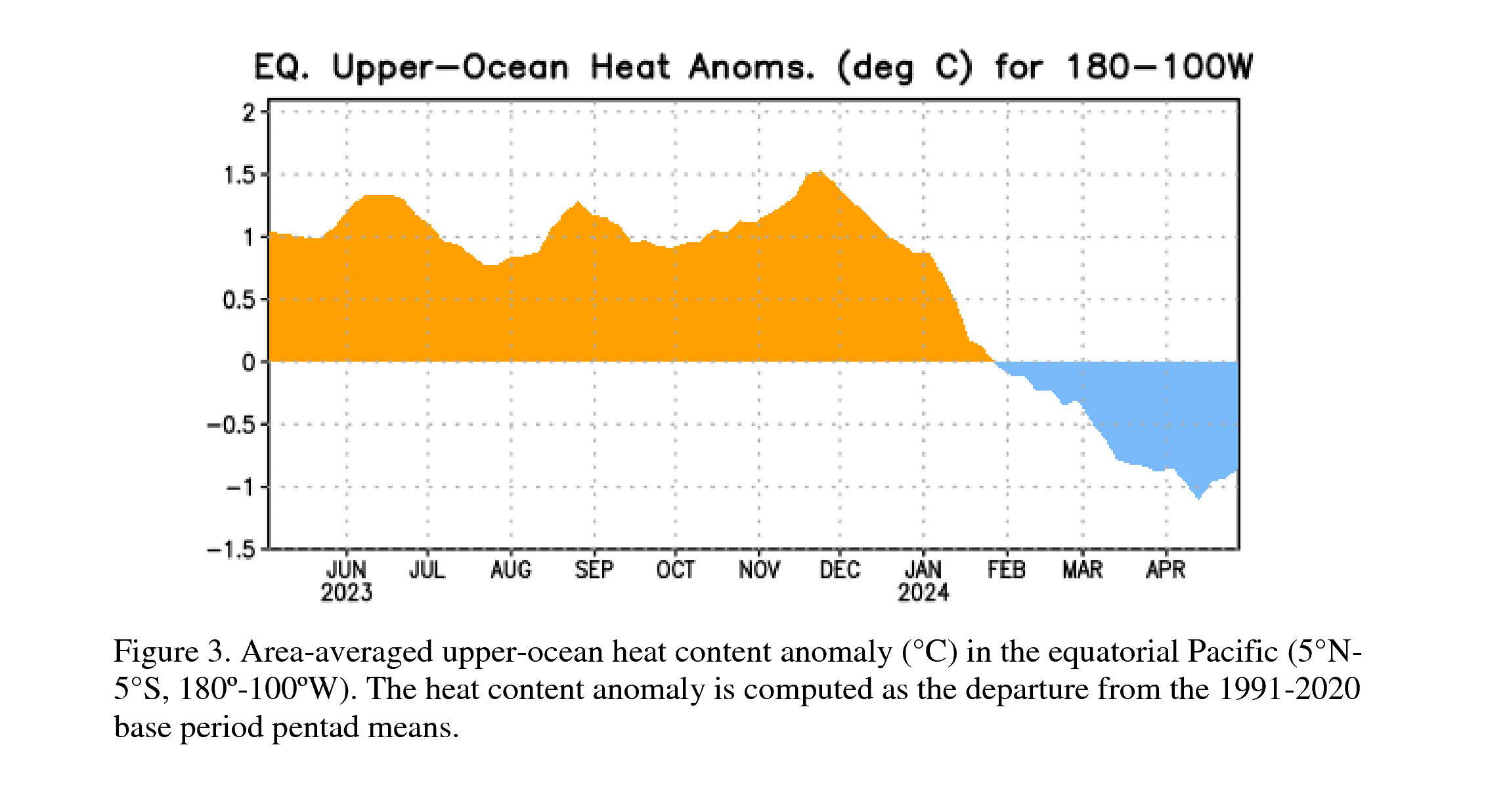
Subsurface temperatures remain significantly above average, with widespread anomalies exceeding 10 degrees Celsius at depth. NOAA says the tropical Pacific also has a deeper-than-average thermocline. The atmosphere is responding as well. Low-level westerly wind anomalies and upper-level easterly wind anomalies have extended across portions of the equatorial Pacific.
Enhanced convection and rainfall have persisted from the central to eastern Pacific, while rainfall has remained suppressed over Indonesia. The Southern Oscillation indices have also remained negative. Taken together, NOAA says the ocean and atmosphere are displaying a coupled pattern consistent with a strengthening El Niño.

Winter 2026-27 Forecasts Will Continue To Evolve
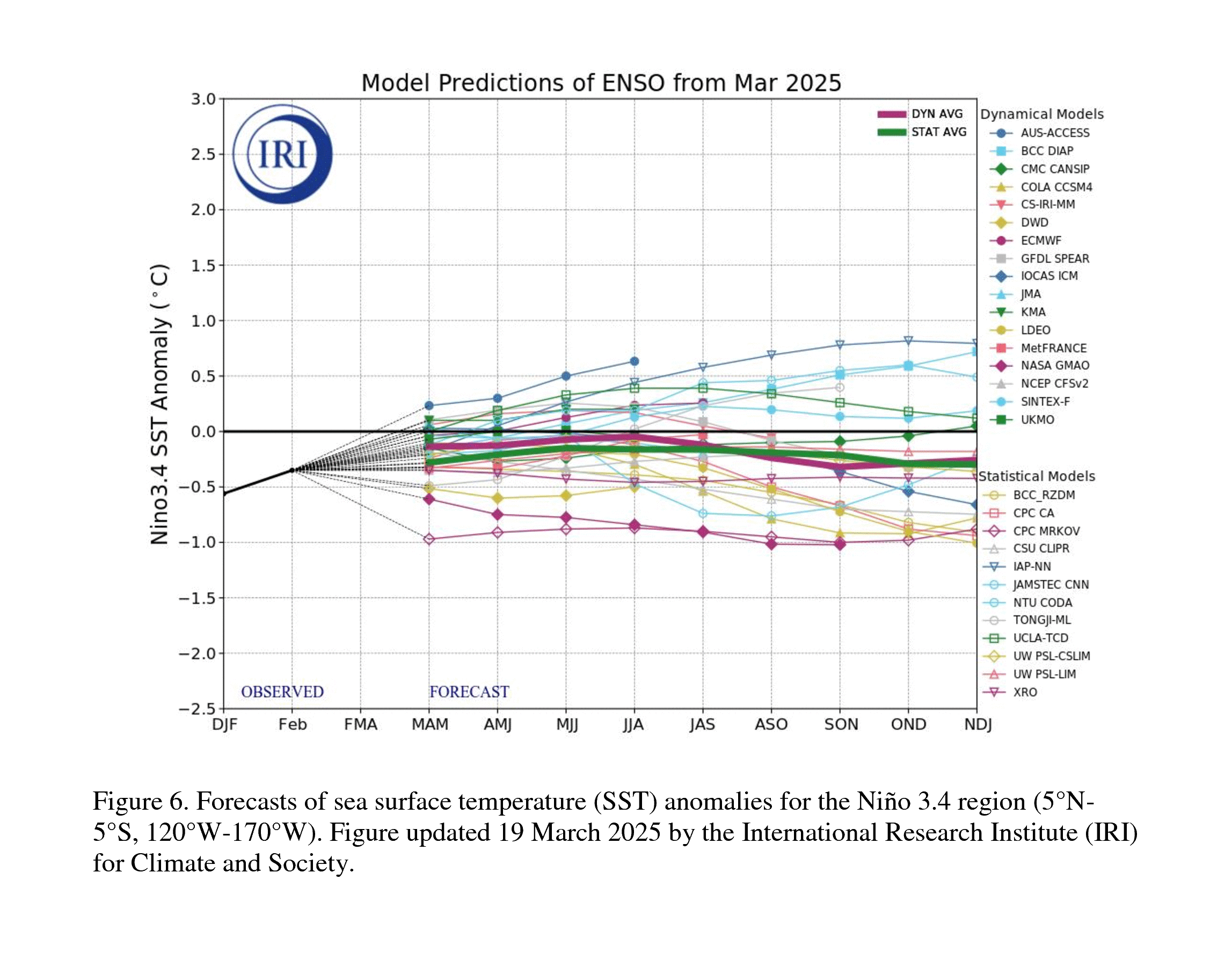
While the latest NOAA update raises the likelihood of a very strong El Niño, the agency continues to emphasize that stronger El Niño conditions increase the chances of related seasonal impacts rather than guaranteeing them.
The September update provides a stronger indication of the large-scale climate pattern expected heading into winter, but individual storm tracks, temperatures and snowfall totals will depend on additional atmospheric factors that cannot yet be predicted with certainty months in advance.
NOAA is scheduled to release its next ENSO Diagnostic Discussion on October 8th, 2026. The Climate Prediction Center also continues to update its seasonal outlooks and ENSO forecasts as new observations become available.

Leave a Reply