
The 5 Best Ski Bags of 2027, Tested on Trains, Planes, and Ski Trips
In almost every skier’s life, at least if you have your priorities straight, opportunities will arise that demand you acquire a ski bag. So, on top of all your other ski gear investments, it might be time to pony up for another bag to stuff it all in so you can drag it around the world. In this, don’t be complacent, and don’t cheap out: your choice of ski bag is a serious endeavor.
I have had the good fortune to drag skis through airports, bus stations, and dirt roads all over Argentina and Chile for weeks at a stretch many times, on countless trains and ski towns in Europe, and around the US and Canada. This has led to strict, research-based conclusions which I have decided to generously share with you, after helping various friends through this very moment in life.
First: there are very real differences in the bags on the market. Some are made to haul real weight, be more maneuverable, and easier to pack, haul and store than others. These all meet a few basic, but critical, criteria. And none come at the lowest price points, but trust me, that extra hundred-ish dollars in design and materials is worth its weight in gold to avoid the misery of traveling across continents anchored to what’s not much more than an awkward, giant, wheeled sack.
Second: your ski bag is going to get beat up. Most quality ski bags are made with good materials and construction, but…they are big, awkward, and heavy. They take a beating. Baggage handlers hate them, and you will at times too (a feeling magnified by how many airports, staircases, trains or bus stations you traverse during said trip). And it’ll get scratches and stains and perhaps some rips in the fabric and possibly look like hell after a few big trips (although, if it’s a big hole from the airlines, as can happen if it gets dragged, file for reimbursement!). But in most cases, as long as it’s well-designed and well-constructed of tough material with zippers that don’t break and handles that don’t rip off, your bag can continue to do its job.
And in the best news, in the last decade or so, ski bags have undergone a marvelous infusion of actual, thoughtful engineering making them more useful and easier to move around, which, to give credit where it’s due, was kickstarted by Norway’s Douchebags (a name now sanitized to Db Journey) and has resulted in various styles, colors, and creative additions from other companies.

Basic Criteria to Consider When Buying a Ski Bag
Adjustable Length: Non-negotiable. You must be able to cinch the bag to the exact length of the skis inside, so it becomes a tight plank of gear. This improves travel inestimably, trust me. Any sag creates extra work for you. Avoid!
Extra Exterior Handles: The more, the better. Handles make positioning, dragging, and moving the bag in every way including steep narrow German train stairs, shoving into small taxis, basically any movement at all much easier. In another plus, would you like for airline baggage handlers to despise (read: abuse, shove, drag, drop) your ski bag slightly less? Give them maximum handles!
Storage Mode: Easy roll-up storage configuration. Super handy in tiny hotel rooms and at home for storing the empty bag.
Wheels: Self-explanatory.

Basic Ski Bag Packing Tips:
Ski bags are a fun tetris game, and how the bag is packed affects how well it functions.
Always separate and lay your skis side by side, bases flat on the bottom of the bag. Do not forget to rubber band/ski strap up alpine brakes and turn your touring bindings to ski mode (otherwise, brakes will make holes in the bag shockingly quickly). The skis form the basis of the tight plank structure created when you cinch down the bag, and allow you to neatly pack all other gear on top of them. Two pairs of skis? Also separate, brakes up in ski mode, and place one ski, base out, on each side of the bag, like the sides of a box. Pile all your other gear in the box.
Put the heaviest things like alpine boots or your avy pack at the bottom by the wheel base, and lighter things like puffies and layers as you go up the bag to the ski tips. Basic physics tells us when the most weight is down by the fulcrum of the wheels, it’s much easier to wheel around and to move.
The Best Ski Bags Of 2027
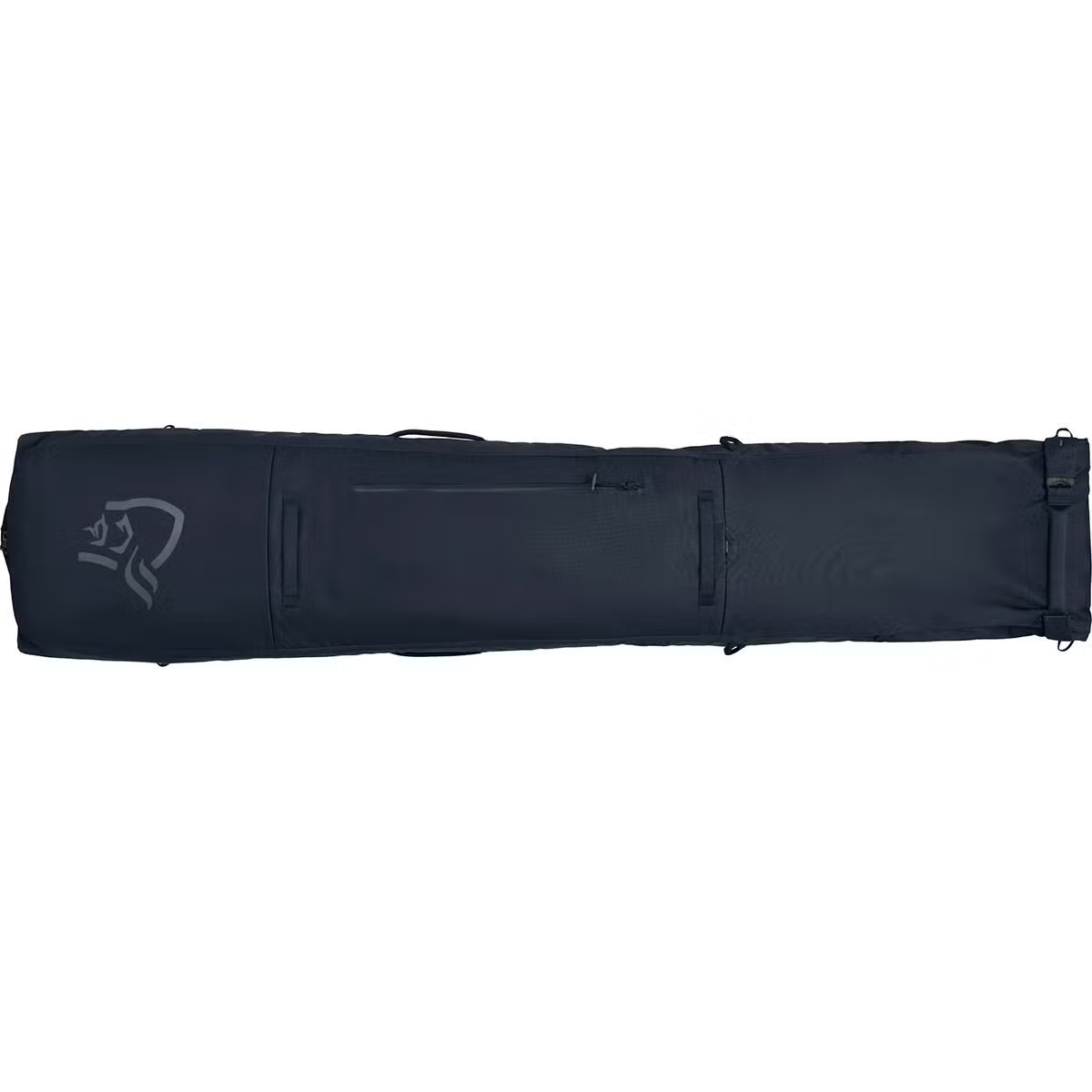
Norrøna XL Ski Bag
- Weight: 5.6 lbs
- Price: $427
True to Scandinavian design, Norrøna’s ski bag is sleek with minimal extras. With an exterior of heavy duty recycled polyester fabric, robust zippers, and a slim layer of padding, the bag is a gem at just over five pounds (being able to fit five more pounds of stuff in your bag before going overweight can be shockingly helpful). It has a roll top design to adjust to the length of the skis inside—and two pairs fit, one laid side by side on the base and another on the sides.
It could use a few more exterior handles, but the ones that exist are well placed and sturdy, with two on the top, one on each side, and one each at the tip and tail, one exterior zip compartment to stash small things. One feature that stands out is the handle at the tip is smooth and round, which does a lot to ease the memorable hand pain thin handles cause as you pull your 50 or 60 or 70+ lb bag up cobblestone streets in Italy or through the never-ending omnibus terminal in Buenos Aires.

Db Journey Snow Roller Pro 127L Ski and Snowboard Bag
- Weight: 9.48 lbs
- Price: $369
The Db design is the one that pushed other gear companies into putting more effort and engineering into more user-friendly bags instead of selling large sacks on wheels. It remains sleek and trim, rejects unnecessary padding, and the fabric stands up to serious abuse. The bottom and sides have “rib-cage” construction to add structure when in use. In addition to the usual exterior grab handles on the top and sides, it has daisy chain straps sewn on either side of the bag front and back.
This is unsung genius for a few reasons: you can grab the bag anywhere on the outside (great in awkward situations like trains and elevators), it allows the bag to adjust exactly to ski length, and you can attach other bags to it. Other Db bags have hooks that connect to the daisy chain for their official “Hook-Up” system, but with a few ski straps, you can snug up just about any other type of duffle or backpack, so they too can piggy-back on the bag. I’ve traveled on 90 percent of ski trips over a decade with my own Db bag, mercilessly put it through every wringer possible, and it keeps on trucking without complaint. The latest iterations address some previous wear and tear issues, such as a reinforced interior base by the wheels, and thicker, tougher fabric throughout.
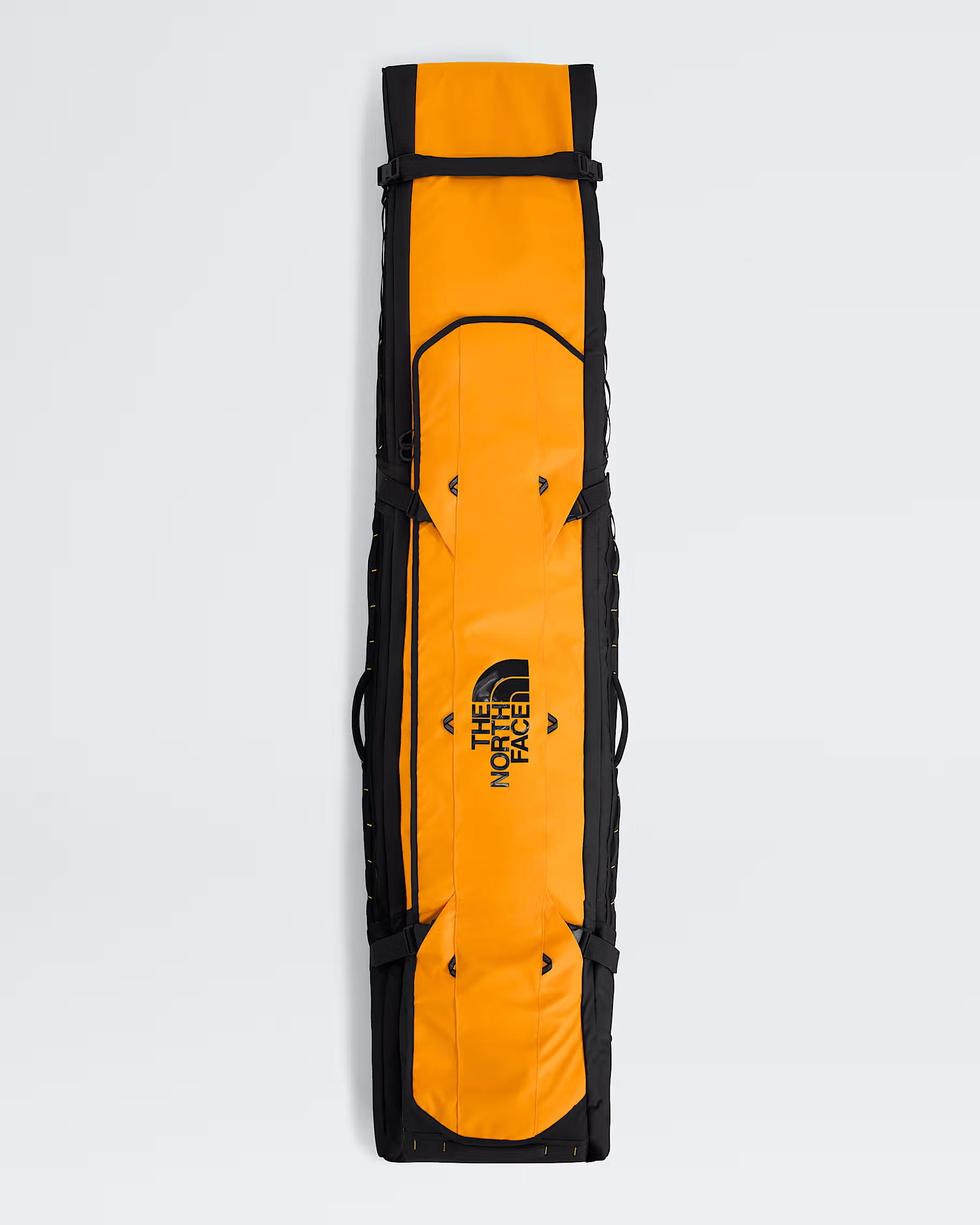
The North Face Base Camp Snow Roller
- Weight: 8 lbs 9 oz
- Price: $360
The North Face’s double ski bag looks like it means business. TNF crafted this bag out of the burly, rubberized-looking material that its famed Base Camp duffels are made of, which helps keep weather out, but most importantly, stand up to trip after trip full of abrasions and abuse. It easily carries one or two pairs of skis with the usual stuffing of gear, and rolls smoothly. The bag boasts solidly placed exterior handles plus daisy chain straps down the sides for attaching other bags and grabbing in awkward maneuvers. It adjusts to the size of your skis with a carabiner and webbing system on the back of the bag.
The pull handle is thoughtfully padded to minimize hand pain as you pull it along over distances, and it can be moved where it works best for you when hauling it around. One con in the design is that it doesn’t unzip fully: the top quarter of the bag is just a tube, but overall that’s a negligible obstacle when traveling, and the external compression straps best use, in my opinion, is as another two sets of exterior handles.

Gregory x Faction Ski Roller
- Weight: 7.2 lbs
- Price: $319
Brand new to the market is this collaboration between Gregory and Faction. It boasts a sleek look, constructed with 900D ripstop polyester with a TPU coating, big grab handles in helpful places, and a top that folds over and hooks into a single daisy chain to adjust up or down to your ski length, or onto the handles lower down for skis shorter than 175cm, to snugly fit all lengths of skis. A more boxy construction than other bags give it high walls along the sides, and make it very easy to fit your second pair of skis along the sides, and to pack it evenly with plenty of stuff.
It zips open fully, and is easy to close and snug up when packed to the brim. Once packed and adjusted to your skis length, it’s notably easy to maneuver around, with well-placed handles to grab it when you need to heft it into cars, buses, or the check-in desk. Overall, it’s a good looking bag that delivers the simple, key, components that make traveling with your skis as pleasant as possible.
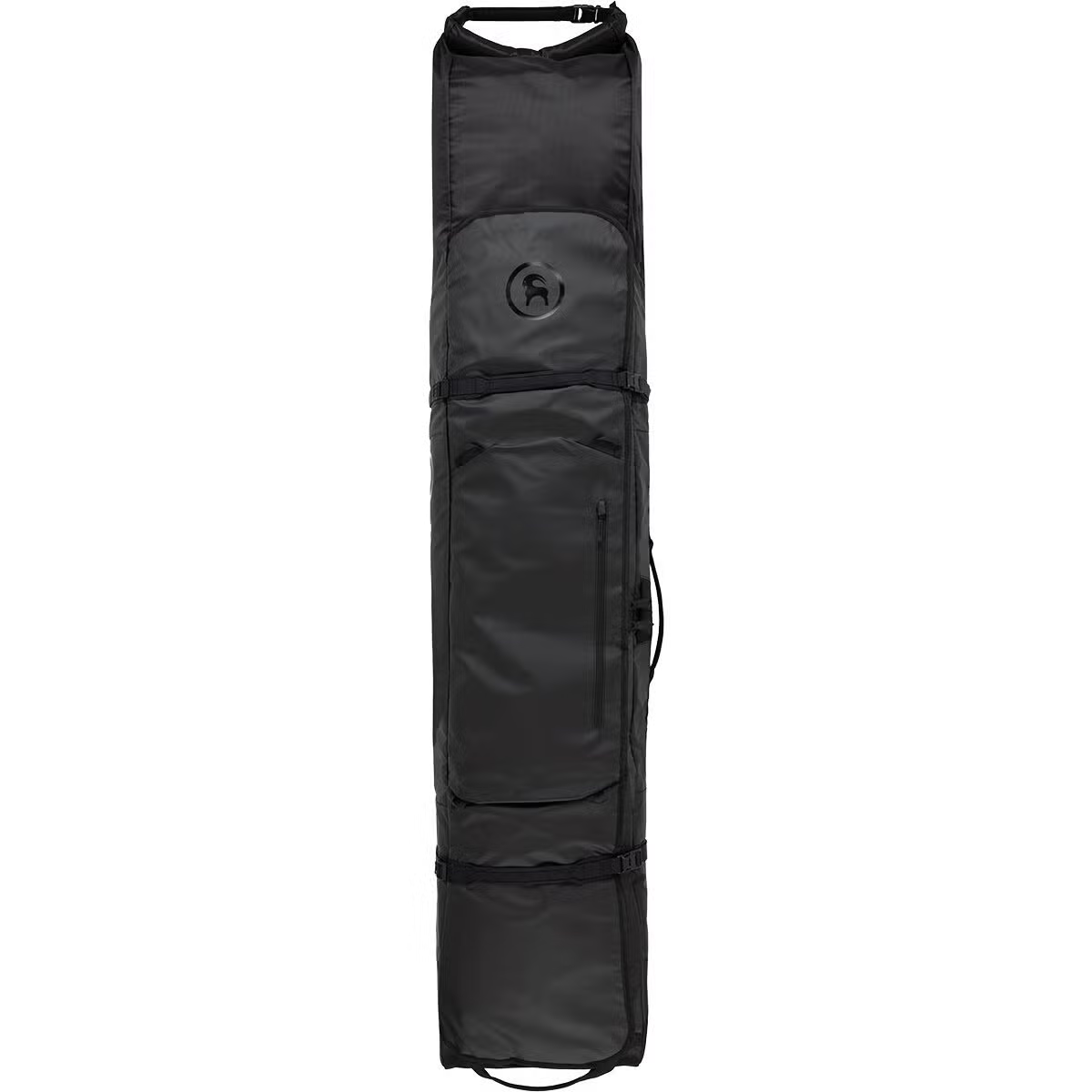
BGA Cottonwoods Double Ski Rolling Bag G2
- Weight: 10 lbs
- Price: $279
This double roller by BGA (Backcountry.com’s in-house brand) hits the all the important boxes: adjustable, well-designed, hefty wheels, decent, intuitive exterior handle placement, big interior pockets (if you like to separate smaller items), exterior straps that work to attach compatible Backcountry.com boot bags (or, to use to attach any other bags with your ski straps, and, last but not least, it looks good. Constructed of 840D polyester and nylon on the outside, it promises to hold up the abuse that comes a ski bag’s way.
The roll top closure tightens the bag to your ski height, and the handle becomes the pull handle too, though it wasn’t always easy to get the packed bag into as tight of a plank as possible, and it could use a couple more external handles. It has a big internal gear flap divider that, in my opinion, adds some bulk and a little weight for not much benefit. But overall, it works well, and if you’re looking to spend a little less, it will get the job done well throughout your travels, though a little less tightly designed than some of the competitors listed here.

Leave a Reply